
Where Logic and Emotion Intersect
The connection between music and mathematics is as old as civilization itself. From the ancient Greeks, who discovered the mathematical ratios that govern musical harmony, to the complex algorithms that generate modern electronic music, the relationship between these two seemingly disparate fields is profound and undeniable. For David Gurwitz, this connection is not just a matter of academic interest; it is the very foundation of his creative process.
The Music and Math Connection:
A Symphony of Numbers
The Music and Math Connection: A Symphony of Numbers
The Language of the Universe
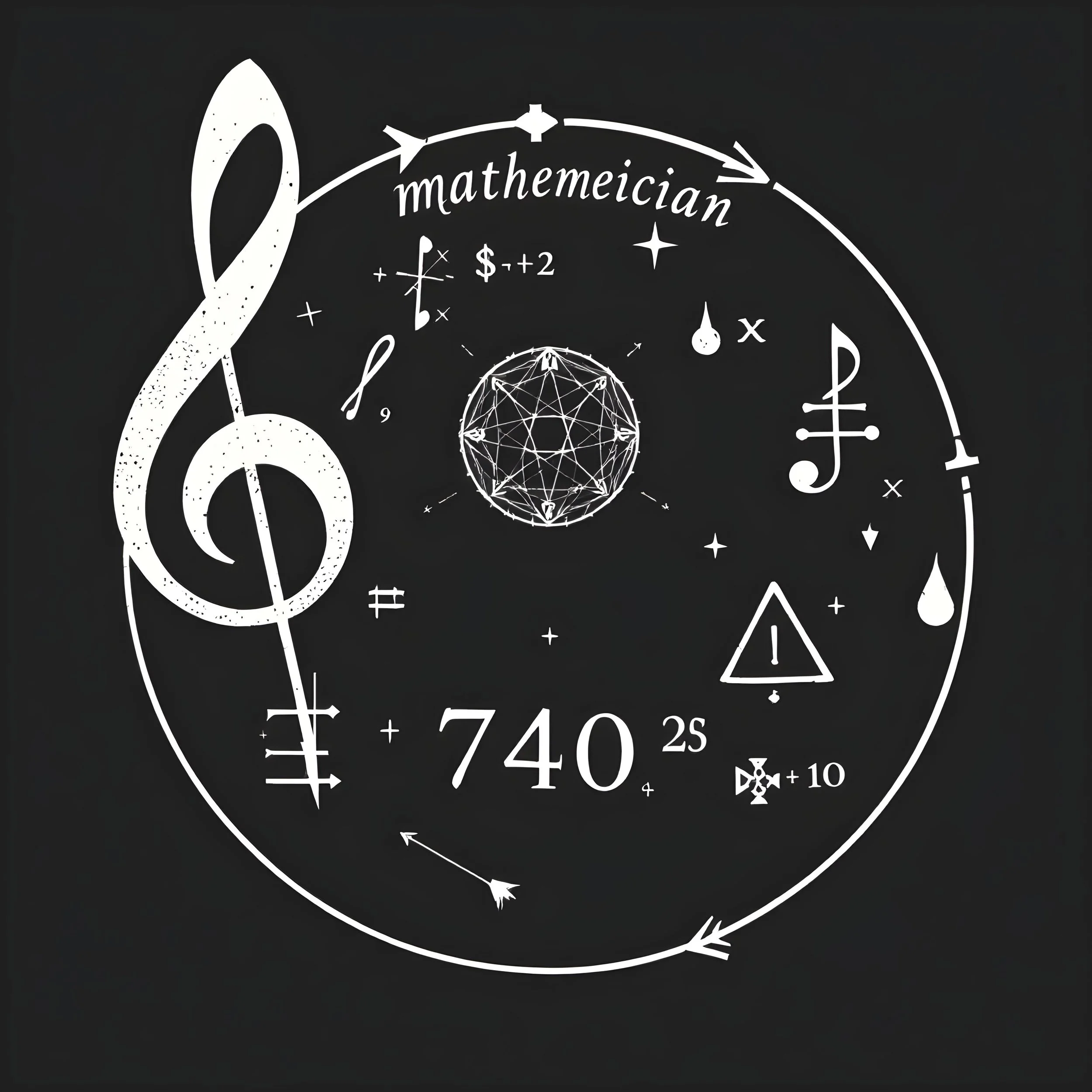
David believes that both music and mathematics are universal languages, ways of understanding and describing the world around us.
He sees the patterns and structures of mathematics in the melodies and harmonies of his music, and he uses these patterns to create compositions that are both intellectually stimulating and emotionally resonant.

Key Concepts
This page will explore some of the key mathematical concepts that are found in David’s music, including:
The Fibonacci Sequence: This famous mathematical sequence, in which each number is the sum of the two preceding ones, is found throughout nature, from the spiral of a seashell to the branching of a tree. David incorporates this sequence into his music to create a sense of natural, organic growth and development.
Arpeggios and Scales: The very structure of musical scales and arpeggios is based on mathematical relationships between the frequencies of the notes. David uses these mathematical relationships to create the hypnotic and emotionally resonant quality of his music.
The Golden Ratio: Closely related to the Fibonacci sequence, the Golden Ratio is an irrational number that is often found in art, architecture, and nature. It is believed to be aesthetically pleasing to the human eye, and David uses it to create a sense of balance and proportion in his compositions.
Music Theory as Math: This section will demystify the basic concepts of music theory, such as the octave, the fifth, and the third, and explain the mathematical principles that underpin them. It will be presented in an accessible and engaging way, much like Leonard Bernstein would teach at the piano.
By understanding the mathematical principles that are at play in David’s music, you can gain a deeper appreciation for its complexity and its beauty. You can learn to listen not just with your ears but with your mind, and to hear the symphony of numbers that is hidden in the sound.