

A New Way to Learn and Love Math
For many children, mathematics can be an intimidating and abstract subject. The endless worksheets, the complex formulas, and the pressure to get the right answer can all conspire to create a sense of anxiety and frustration. But what if there was a way to make math fun, engaging, and relevant to the things that children already love? This is the simple but powerful idea behind David Gurwitz’s groundbreaking educational program, Math Through Sports.
Teaching Math Through Sports:
Making Numbers Fun
Teaching Math Through Sports: Making Numbers Fun
The Program
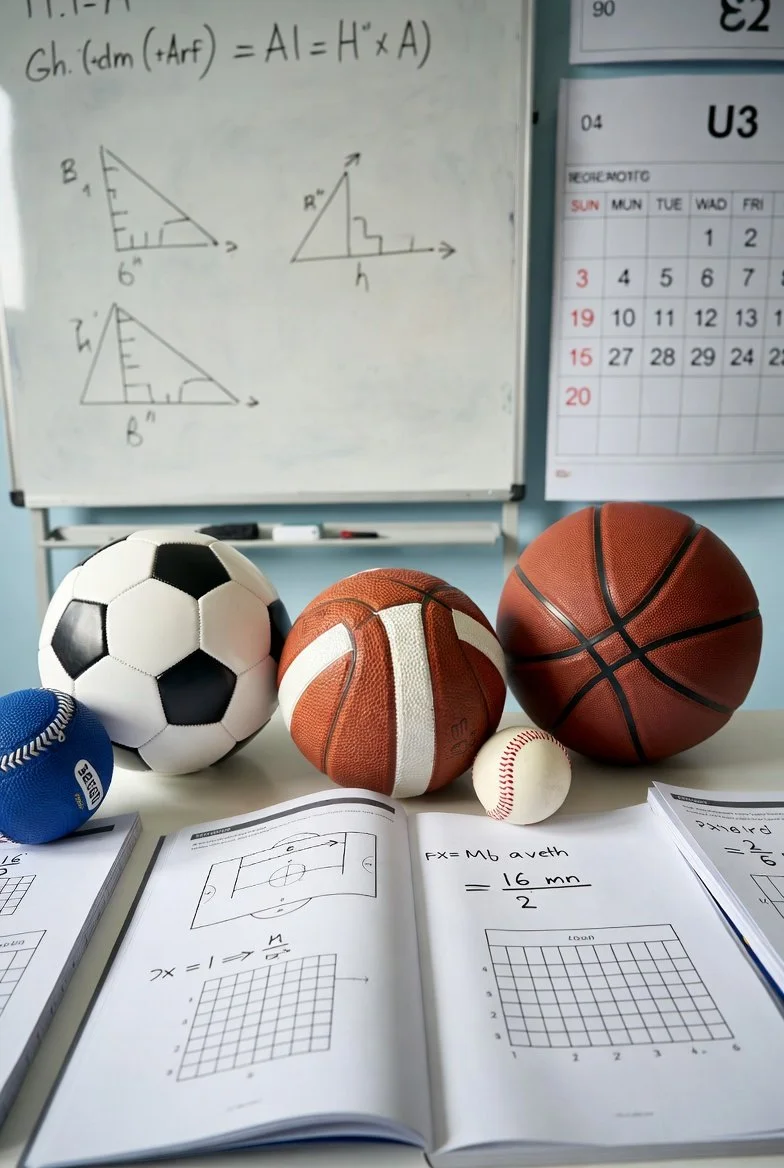
Math Through Sports is a unique and innovative program that uses the world of sports to teach mathematical concepts in a way that is both fun and intuitive. By leveraging children’s natural passion for games like basketball, baseball, and football, the program is able to demystify complex mathematical ideas and to show children that math is not just a subject in a textbook but a tool that can be used to understand and excel in the things they love.
The Math Through Sports curriculum is designed to be flexible and adaptable, and it can be used in a variety of settings, from the classroom to the after-school program to the living room. The program is divided into modules for different sports, each of which explores a range of mathematical concepts, including:
Basketball: Calculating shooting percentages, understanding player statistics, the geometry of the court, and the physics of a perfect shot.
Baseball: The physics of a curveball, calculating ERAs, the statistics of hitting, and the geometry of the baseball diamond.
Football: The geometry of passing routes, calculating quarterback ratings, the physics of a tackle, and the statistics of the game.
Pickleball: A new and exciting module that explores the unique mathematical challenges and opportunities of this fast-growing sport.
The Curriculum
The Math Through Sports program is born out of David’s own life experience. As a young man growing up in the Bronx, he learned to love both basketball and mathematics, and he discovered the profound connection between the two on the schoolyards and in the classrooms of the Bronx High School of Science. His journey from a basketball-loving kid to a concert pianist and a mathematical wizard is a testament to the power of interdisciplinary thinking and the importance of following your passions.